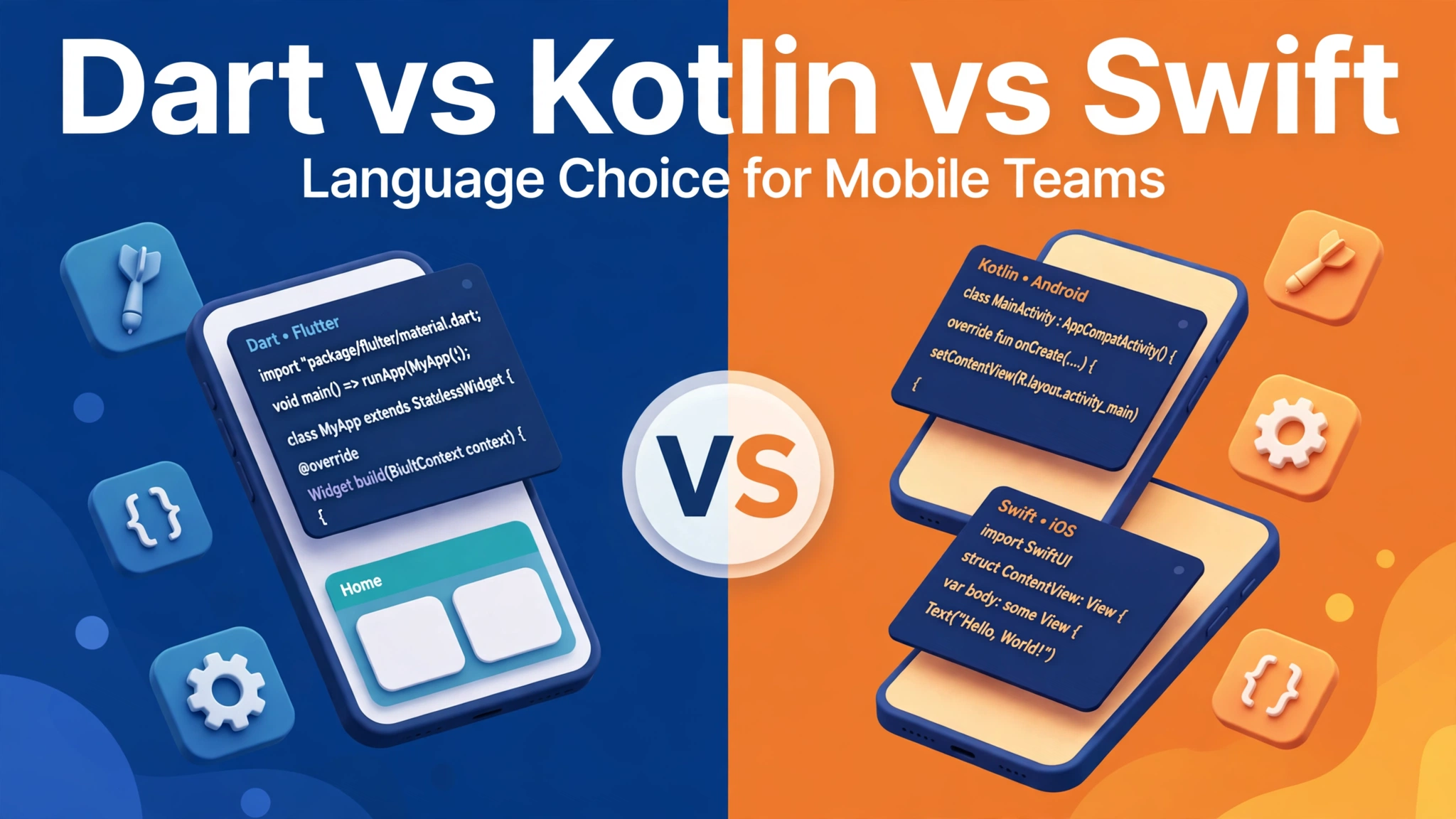
Dart vs Kotlin vs Swift: Language Choice for Mobile Teams
Dart vs Kotlin vs Swift compared for founders: cost, team size, hiring, and when each language wins for your mobile app in 2026.
 Talha Javed7 min read
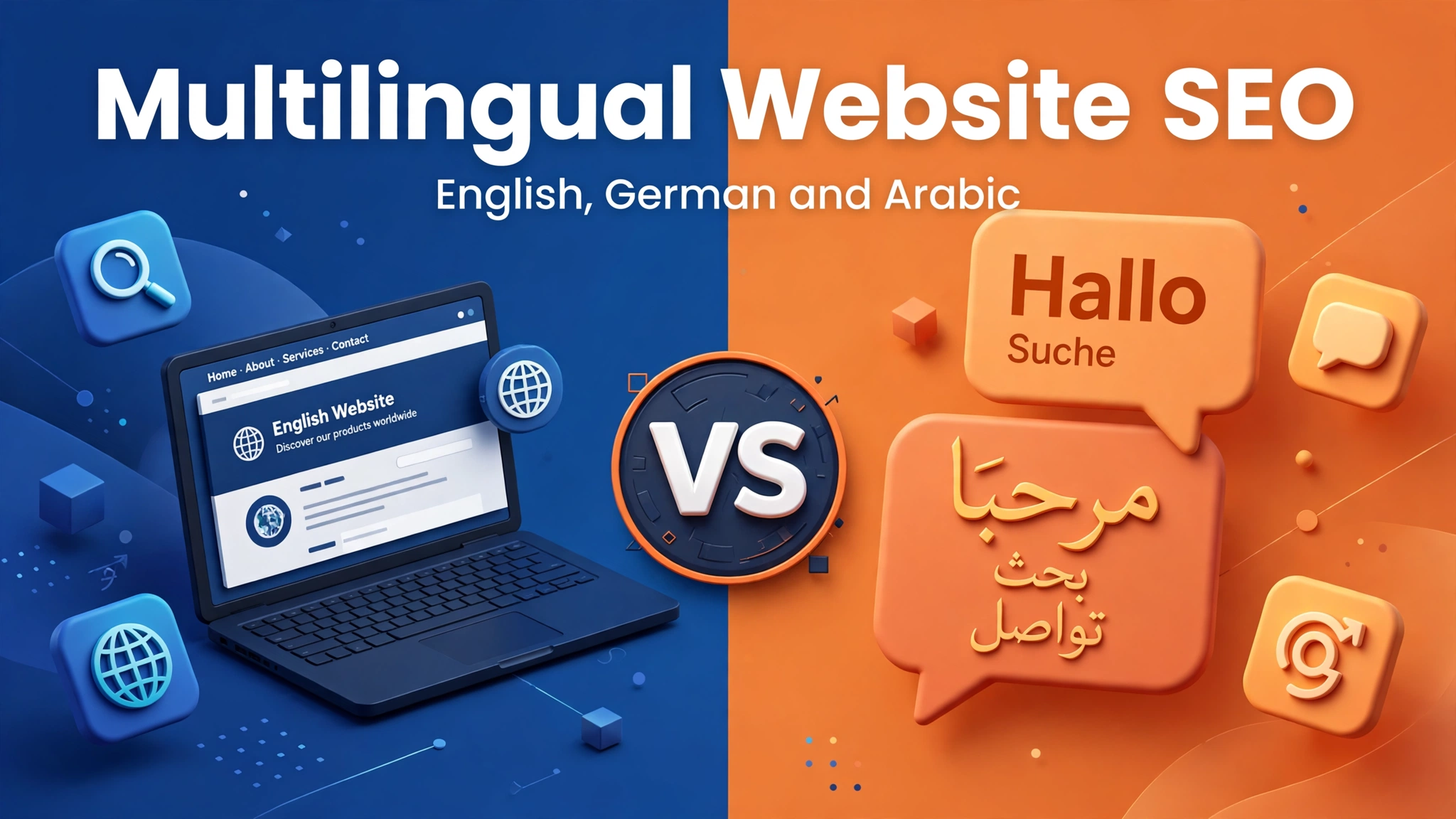
You sell in more than one country, but your website only speaks English. A buyer in Munich finds your site, reads half a page, and leaves. A buyer in Dubai does the same, because the Arabic version of your page does not exist, or it reads like a machine wrote it. That is lost business, and it is exactly what multilingual website SEO is meant to fix.
Multilingual website SEO makes each language version of your site findable, readable, and trustworthy for the people searching in that language.
People search in their own language. A German buyer looking for a software agency types a German query into Google, and Google answers with German pages. If your site has no German page, you are not in that result at all.
The same holds in the Gulf. A clinic owner in Dubai or a retailer in Doha may read English well, but when they compare suppliers they read the Arabic pages first. And a buyer who cannot read your contact page or your pricing in their language has to take a risk to enquire. Most will not. They enquire with the competitor whose site already speaks to them. In our experience, this is the quietest way a website loses business. Nothing breaks. The enquiries simply go elsewhere.
Before you translate a word, decide where each language lives. For most small and mid-size businesses, subdirectories are the clear winner. German pages live under /de/, Arabic pages under /ar/, and English pages stay at the root or under /en/. Everything sits on one domain, so the authority your site has already built up benefits every language.
The alternatives cost more effort for little gain. Subdomains, such as de.yoursite.com, are often treated by search engines as semi-separate sites, so you split your effort. Separate domains suit large companies with local offices. For a business adding its second or third language, the cost and the management overhead rarely justify either option. Keep two rules whatever you choose: one URL holds one language, and a visitor who switches language lands on the same page in the other language, not back on the homepage.
Hreflang is a small piece of code that tells Google which language and region a page is for. A page tagged en-GB is the English page for the UK. A page tagged de-DE is the German page for Germany. A page tagged ar-AE is the Arabic page for the UAE. Without it, Google has to guess, and it guesses wrong more often than people expect.
Hreflang has a few rules that catch people out. First, the links must go both ways. If your English page points at the German page, the German page must point back. A one-way link is ignored. Second, the codes must be right. Arabic is ar, not ae. German for Germany is de-DE. Third, every hreflang link must point at a live page. A tag pointing at a page that redirects or returns a 404 error does more harm than no tag at all. There is also the x-default tag, which points at the page a visitor sees when no language matches. Put hreflang in the head of each page or in your sitemap, but not both with different values.
Machine translation is fine for a first draft. It is not fine as the published page. A German page full of awkward phrasing tells a German buyer that nobody at your company speaks German, which is the opposite of the message you want to send.
Good translation is not word for word. German business writing is formal in a specific way, and the choice between Sie and du, the formal and informal forms of you, signals how you see the customer. Arabic has its own split: written content across the Gulf uses Modern Standard Arabic, which works everywhere, while spoken dialects differ from country to country.
The other mistake is translating the page and forgetting everything around it. Page titles, meta descriptions, image alt text, button labels, and error messages all need translating too. Translate the whole experience, and decide once whether brand and product names stay in English or get translated, then keep that decision the same on every page.
Arabic changes the layout, not just the words. The whole page mirrors. Navigation runs right to left, forms start on the right, and icons that point one way in English need to point the other way in Arabic.
Mixed content needs care. Phone numbers, prices, and Latin brand names sit inside Arabic sentences, and they can display in the wrong order if the page is not set up properly. Arabic script also needs a proper font with enough line height, tested on real phones. Images with text must be recreated for Arabic, not flipped, because flipping mirrors logos and diagrams that should never be mirrored.
German brings a different layout problem: long words. A button that says Get a quote in English might say Angebot anfordern in German, and a menu item that fits neatly in English can overflow in German. Build layouts with flexible widths, test navigation in German at real screen sizes, and shorten headlines where the German version genuinely does not fit rather than shrinking the font until nobody can read it.
Language is the start, not the whole job. Currency and pricing come first. If you quote in euros for Germany and dirhams for the UAE, say so on the page. Phone numbers come next, in local format, with a country code that works from abroad. A UAE visitor expects to reach you on WhatsApp. A German visitor expects a proper contact form and a response within a working day.
Legal pages differ by market too. A business site aimed at Germany needs an Impressum, a legal notice page that German law requires, and German privacy expectations are stricter than most. Get local advice on this before you launch, not after a complaint arrives. The same applies in the Gulf, where commercial registration details are often expected on a business site.
Run through this list before a new language version goes live. It takes an hour, and it catches the mistakes that cost rankings for months.
No. For most businesses, one website with a subdirectory per language, such as /de/ and /ar/, works best. You keep one domain and one hosting setup, and the authority your site has already built benefits every language. Separate domains only make sense when each language version is run as a separate local business.
No. Properly translated content is not duplicate content. Google understands that a German page and an English page serve different audiences, and hreflang tags make that explicit.
You can use it to draft, but do not publish it as it stands. Have a human translator or a native speaker review and rewrite the pages that matter, starting with your homepage, your service pages, and your contact page. Blog posts can follow once the money pages are right.
Start with the market that already brings you revenue, or the one you are actively selling into. One well-built language version beats three rushed ones.
A multilingual site is not a translation project. It is a sales project that happens to involve translation, and it pays for itself when a buyer in Munich or Dubai finds your site, reads it in their own language, and trusts you enough to enquire. If you are planning a multilingual website, or your current language versions are not bringing enquiries, book a free strategy call and we will look at your site together. You leave with a plan and a price range, and we reply within 24 hours.
Still choosing who builds it? Our guides to choosing a software agency in Dubai and hiring a software agency in the UK cover the questions worth asking.
More from the studio.
Dart vs Kotlin vs Swift compared for founders: cost, team size, hiring, and when each language wins for your mobile app in 2026.
Talha Javed7 min readFixed price or time and materials? This guide explains software agency pricing models, when each one fits, and what to ask before you sign.
Talha Javed7 min readAn AI receptionist for a dental clinic answers calls, books appointments and handles cancellations 24/7. What it does, what it costs, and what to check first.
Talha Javed7 min readA free 30-minute call with a senior engineer. You leave with a plan and a price range, whether or not you hire us.