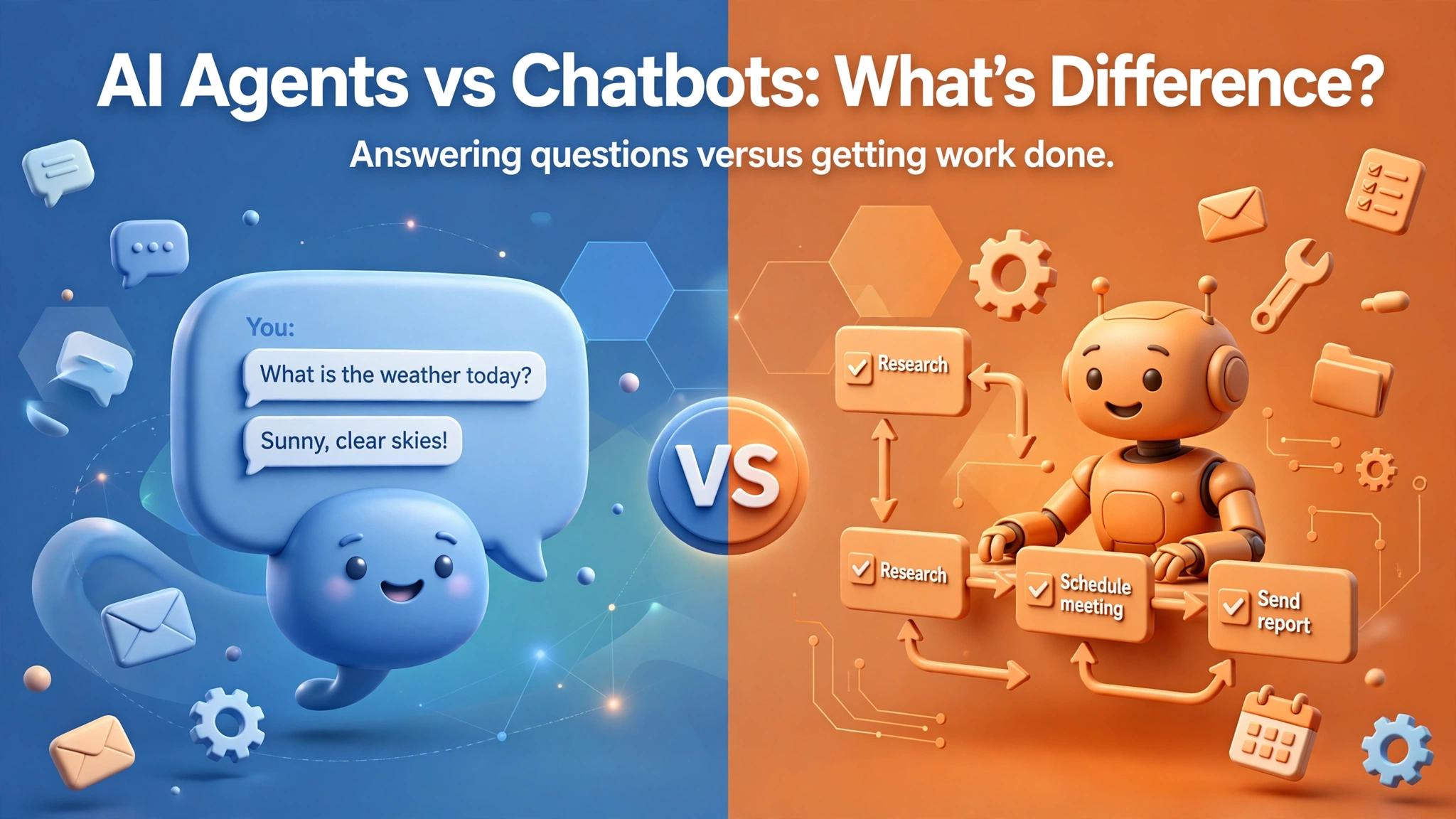
AI Agents vs Chatbots: What's the Difference?
AI agents vs chatbots explained: what each one actually does, when a simple chatbot is enough, and when you need an agent that can take action for you.
 Talha Javed7 min read
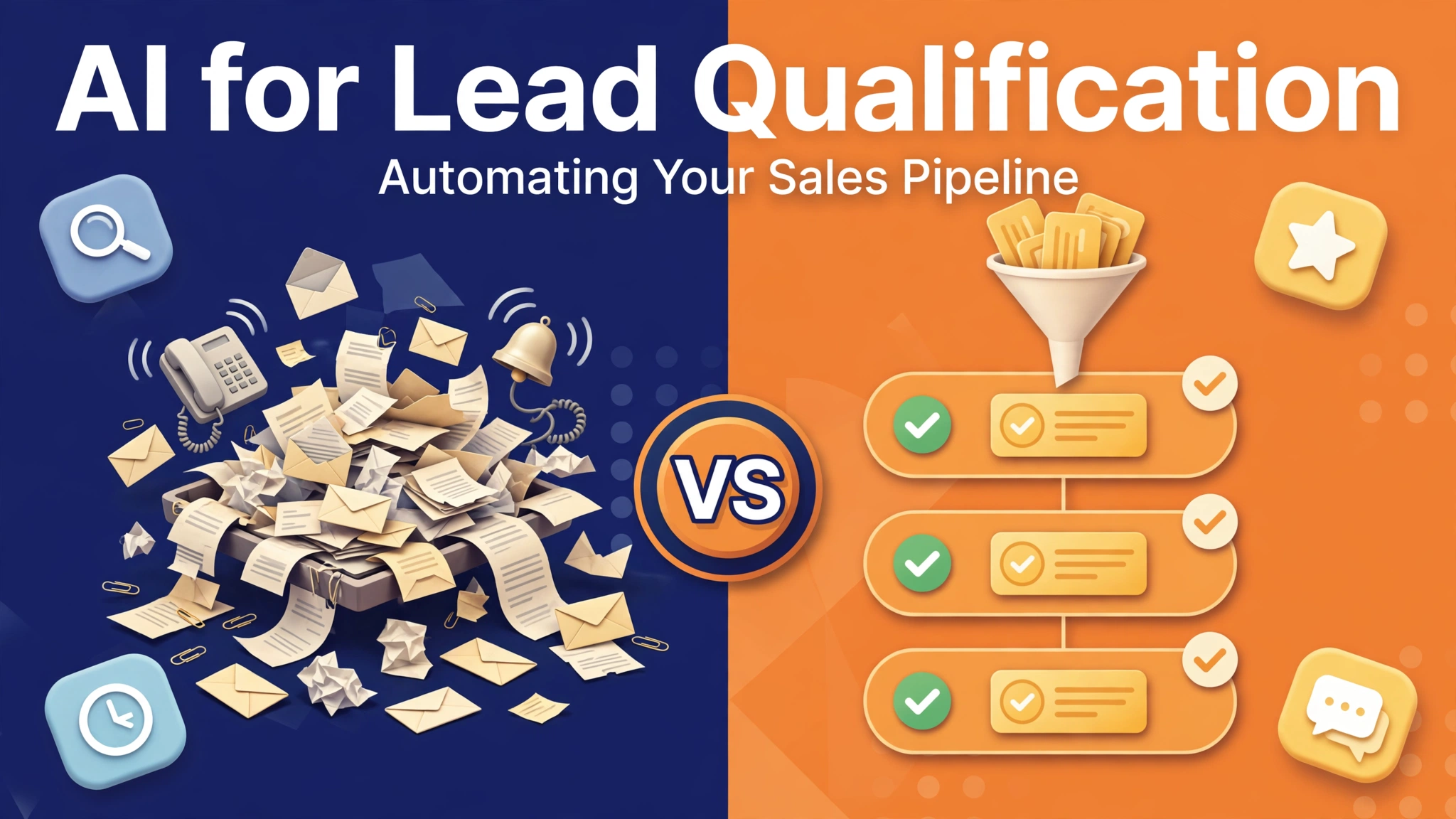
Sales teams know the feeling. The inbox fills up, the phone rings, the website form keeps pinging, and by Friday half the week has gone on conversations that were never going to buy. The problem is rarely a lack of leads. It is a lack of sorting. AI lead qualification is simply that sorting, done automatically, the moment a lead arrives.
This post explains what AI lead qualification does, how it fits into a sales pipeline, what it costs, and where it goes wrong.
Qualification is the work of deciding whether an enquiry is worth a salesperson’s time. It asks a handful of blunt questions. Does this person have the budget? Do they need what we sell? Are they ready to decide, or just browsing? Who else is involved in the decision?
In most small and mid-sized businesses, this work happens by gut feel. A receptionist glances at a form and guesses. A sales rep calls everyone back in the order the messages arrived. The loudest enquiries get answered first, not the most promising ones. That is not a people problem. It is a process problem, and it is exactly the kind of process software is good at.
AI lead qualification automates the first pass. It reads the enquiry, checks it against criteria you set, scores it, and routes it. Hot leads get a call within minutes, casual browsers get a helpful automated reply, and your team spends its hours on the conversations that can close.
Ask a sales team where their week goes and the answer is usually surprising. A large share goes on admin: reading enquiries, replying to people who wanted a price list, chasing no-shows, and updating the CRM. The actual selling is often a minority of the week.
Speed matters. A lead that waits a day for a reply has usually moved on. In our experience, the businesses that win are very often the ones that respond first with something useful, not the ones with the lowest price.
Automation changes the shape of the day rather than replacing the salesperson. The system does the sorting, the reminders, and the first reply. The human handles the conversation that needs judgment. AI handles volume. People handle nuance.
A working lead qualification setup has four stages. None of them is exotic on its own. The value is in how they connect.
The lead arrives from a form, a chat widget, WhatsApp, or a phone call transcript. The system pulls together what you already know: what page they came from, what service they asked about, which country they are in, and whether they have contacted you before.
The key decision here is what you ask for. Every extra form field costs you enquiries. In our experience, three or four fields are enough to qualify well: what they need, when they need it, roughly what budget they have in mind, and how to reach them. The rest can be gathered in conversation.
Scoring is a set of rules you define, not a black box. A lead asking for a service you offer, in a city you serve, with a timeline this month, scores high. A lead asking for a service you stopped offering two years ago scores low.
Keep scoring simple: hot, warm, and cold, based on five or six criteria you choose. Look at your last twenty closed deals and ask what those buyers had in common. That list is your scoring model.
A hot lead should reach the right person fast. Enquiries about dental implants go to the clinic coordinator, not the general inbox. A property buyer in Abu Dhabi goes to the agent covering that area. A request that arrives after hours gets an instant acknowledgment with a clear time for a callback.
The first response does not need to be clever. It needs to be fast, specific, and honest about what happens next. A message that says “Thanks, Sarah, we have your request for a Saturday appointment, and our coordinator will call you before 11am tomorrow” will hold a lead far better than a generic “We will be in touch.”
Most leads do not buy on the first contact. They go quiet, they compare options, they get busy. A qualification system keeps track of who was contacted, when, and what was said, and it nudges at sensible intervals with something useful. Automation does not make follow-up pushy. It makes it consistent, and consistency is what turns a warm lead into a signed client.
A dental clinic in Dubai gets enquiries from its website, Instagram, and Google Maps. Some want a cleaning next week, some want a full implant consultation, and some are asking about prices from another country. An AI assistant can sort these in seconds, book the cleaning directly, and route the implant enquiry to the treatment coordinator with the right context. The front desk stops triaging and starts welcoming.
A real estate agency in London or Abu Dhabi deals with a different shape of the same problem. Many enquiries are early-stage browsers. A few are ready to view this week. Scoring by budget range, area, and timeline lets agents spend their viewings on the ready buyers, while the browsers get listings and market updates automatically until they are ready.
There is no single price, because the range depends on what you already have. A business starting from scratch, with no CRM and a simple website form, typically spends the least on software and the most on setup: defining the criteria, connecting the channels, and writing the responses. A business with a CRM already in place usually connects an AI layer to what exists, which is faster.
Think in three bands: a simple setup with one channel and basic scoring; a connected setup with several channels feeding one CRM; and a full pipeline rebuild with a new CRM and AI voice handling. In each case the ongoing cost is modest compared with the setup.
The most common failure is over-automation. A lead says something unusual and gets a confident wrong answer. The fix is a handover rule: whenever the system is unsure, it hands over to a human immediately, with the full conversation attached.
The second failure is stale criteria. Your market changes, your services change, and the scoring rules stay frozen. Review the rules every few months against the leads that became customers and the ones that went nowhere.
The third failure is data nobody trusts. If the team does not believe the scores, they will ignore them and go back to calling everyone in arrival order. Scores earn trust by being right visibly, so start with a small set of obvious rules and add complexity only once the team sees them work.
You do not need to replace your CRM, your website, or your phone system to start. Pick one channel where the volume hurts most, usually the website form or WhatsApp. Write down your qualification criteria on one page, define what happens to a hot, warm, and cold lead, then automate just that channel for a month. Measure how fast hot leads get a human response and how many enquiries get any response at all. If both improve, extend to the next channel. If not, the problem is usually the criteria, not the technology.
Only if it pretends to be human or traps people in loops. A clear, fast, helpful first response annoys nobody. What annoys customers is waiting a day for a reply.
It helps, but it is not a precondition. A simple setup can run on a shared inbox and a spreadsheet for a while. Once follow-up volume grows beyond what one person can track, a CRM becomes necessary, and that is also the point where qualification pays for itself.
A focused first version, one channel and clear criteria, typically takes a matter of weeks. What usually takes the time is the decisions: what counts as a hot lead, who handles which enquiry, and what the replies should say.
Yes, provided the business supplies the right wording. The model handles the languages; your team supplies the local knowledge, like how customers in Riyadh phrase a request or what a German buyer expects in a first reply.
Start with the question your team already asks about every enquiry: is this worth a call today? Write down how you answer it, and you have the outline of your qualification system. Automate that answer for one channel, watch it for a month, and let the results decide what happens next.
If you would like help building it, book a free strategy call with us. We will look at how your enquiries arrive today and map out the scoring and routing that fits your business. We aim to reply within 24 hours, and you leave the call with a plan whether or not you work with us.
For a related read, see AI Booking Assistants for Clinics and Salons.
More from the studio.
AI agents vs chatbots explained: what each one actually does, when a simple chatbot is enough, and when you need an agent that can take action for you.
Talha Javed7 min readA RAG chatbot explained in plain terms: how retrieval-augmented generation grounds answers in your own documents, and where it still needs care.
Talha Javed7 min readAI chatbot development cost in 2026, broken down: the three price tiers, the cost drivers behind a quote, and the monthly fees most proposals quietly leave out.
Talha Javed7 min readA free 30-minute call with a senior engineer. You leave with a plan and a price range, whether or not you hire us.