How Much Does AI Chatbot Development Cost in 2026?
AI chatbot development cost in 2026, broken down: the three price tiers, the cost drivers behind a quote, and the monthly fees most proposals quietly leave out.
 Talha Javed7 min read
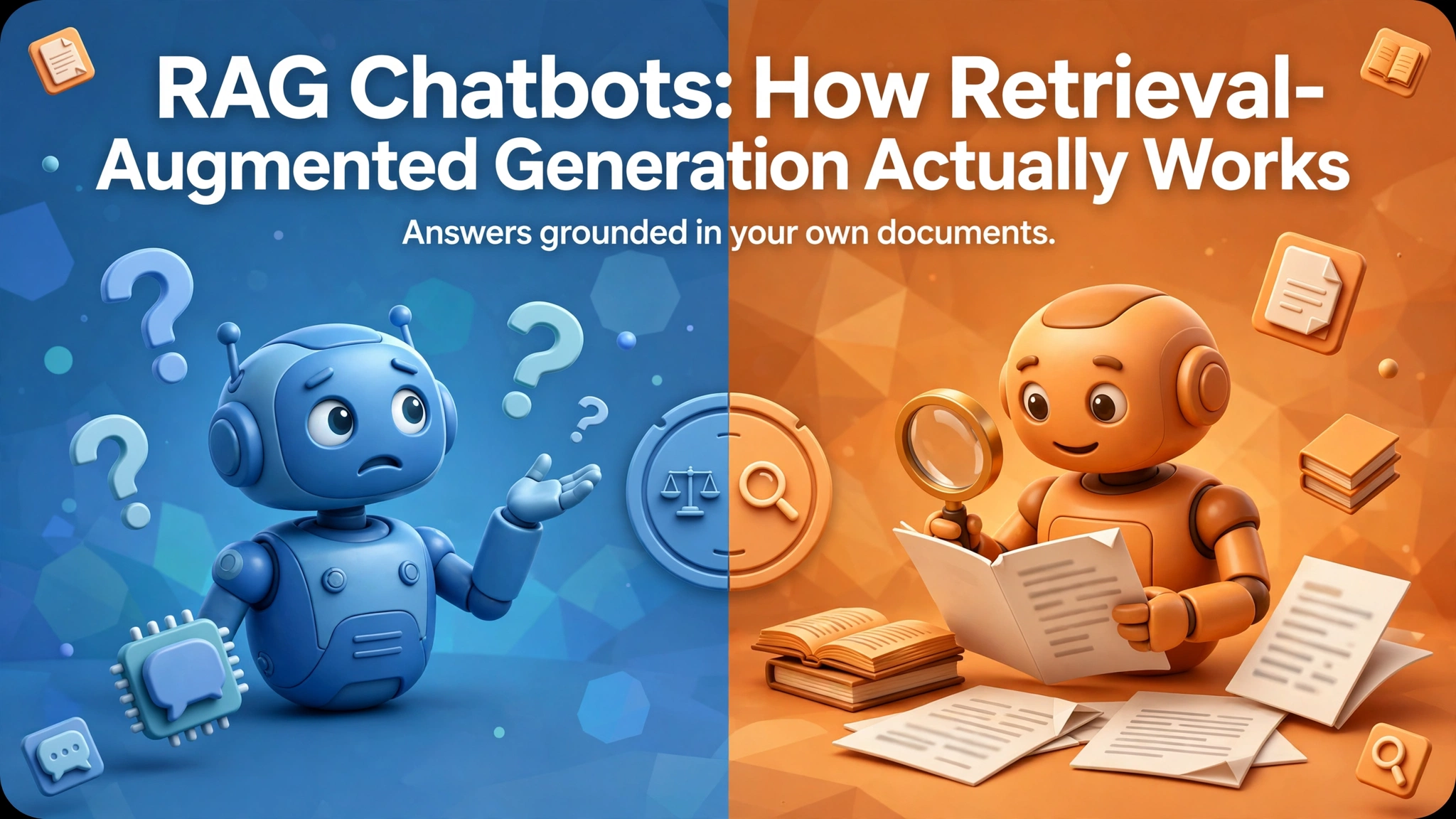
Ask a general-purpose chatbot about your business and you will get a confident answer. Ask it about your refund policy, your current price list, or the steps in your onboarding guide, and that confidence becomes a problem. The model was not trained on your documents, so it fills the gap with something plausible. Retrieval-augmented generation, usually shortened to RAG, exists to close that gap. A RAG chatbot looks things up before it answers, and that one change turns a general conversational tool into something you can put in front of customers. This is a RAG chatbot explained from the ground up: how the lookup works, what it fixes, where it still falls short, and what to get right if you build one. No promise that RAG is magic. It is a practical architecture, with practical limits.
A standard chatbot answers from what it learned during training: broad knowledge, frozen at a cutoff date, and unaware of your company. A RAG chatbot works differently: when you ask a question, it first searches your own documents for the passages most relevant to that question, hands those passages to the language model along with your question, and only then generates an answer.
Think of it as the difference between asking a clever stranger and asking a clever colleague who has your handbook open on the desk. The stranger may be brilliant, but they are guessing about your business. The colleague is working from the source. That is the whole idea, and it is why RAG has become the default approach for business chatbots that need to answer from real company knowledge.
Language models are prediction machines. Given a prompt, they produce the most likely next words, one after another. That is a strength when you want fluent writing, and a weakness when you want facts. A model that has never seen your delivery areas, your warranty terms, or your product specifications will still produce a fluent sentence about them, because fluency is what it was trained to optimise.
This is where confident-but-wrong answers come from. The model simply has no way to know what it does not know, and nothing in its training tells it to stop and check. If your chatbot answers from general knowledge alone, wrong answers are not an occasional bug. They are the expected behaviour, and they will land on exactly the questions that matter most: prices, policies, availability, and procedures.
RAG changes the incentives. The model is told to answer from the passages provided and to say when those passages do not contain the answer. That alone does not guarantee accuracy, but it gives the model something real to work from, and gives you something to audit afterwards.
A RAG system has a handful of parts. Understanding them helps you judge a proposal or a vendor demo, because most failures trace back to one of them.
Everything starts with the source material: help-centre articles, product manuals, policy pages, FAQs, and internal guides. The quality of the chatbot is capped by the quality of this collection. Outdated documents produce outdated answers, however good the technology is. In our experience, the document clean-up is often the least glamorous and most valuable part of a RAG project: duplicates, contradictory versions of the same policy, and half-finished drafts all need sorting before anything is indexed.
Documents are split into smaller pieces, called chunks, before they are stored. A chunk might be a paragraph or a section. Chunking matters because the system retrieves chunks, not whole documents: too large, and the model gets irrelevant text alongside the useful bit; too small, and the passage may lack context. Good chunking respects the document’s structure, headings, lists, and natural breaks, rather than slicing blindly at fixed lengths.
Each chunk is converted into an embedding, a long list of numbers that captures the meaning of the text in a form a computer can compare. Chunks with similar meanings end up with similar numbers, and these embeddings are stored in a vector store, a database built for similarity search. When a user asks a question, the question is converted into an embedding the same way, and the store returns the chunks closest to it.
That is why RAG can match a customer asking about returning an item with a chunk about the returns policy, even if the wording differs: search by meaning, not just by keywords.
The retrieved chunks are inserted into the prompt sent to the language model, together with the user’s question and instructions: answer from the retrieved passages, quote or paraphrase rather than invent, and say clearly when the answer is not in the material. The model then writes the reply. A well-built chatbot keeps that answer focused; a poorly built one parrots chunks verbatim or drifts away from the retrieved text and starts inventing again.
RAG is at its best when the questions have answers that already exist somewhere in your documents. Customer support is the obvious case: order policies, troubleshooting steps, service coverage, and product details. Internal knowledge assistants are another strong fit, helping staff find the right procedure without digging through shared drives.
It also helps with freshness. When a price changes or a policy is updated, you update the document and re-index it, rather than retraining a model. That is a far cheaper and faster cycle, and one of the main reasons RAG is preferred over retraining for most business use cases.
RAG is not a cure for every chatbot problem, and it is worth being clear about the limits before you commit.
First, retrieval can miss. If the right passage is worded very differently from the question, or if the answer is spread across several documents, the search may return incomplete chunks, and the model then answers confidently from incomplete material. Improving retrieval, through better chunking, metadata, or hybrid keyword-and-meaning search, is usually where the real engineering effort goes.
Second, RAG cannot reason its way out of bad sources. If two documents contradict each other, the chatbot has no way to know which one is current. If the documents are vague, the answers will be vague. Garbage in, garbage out applies here in full.
Third, some questions do not have document answers at all. Judgement calls, account-specific questions, and anything requiring live data, such as current stock levels or a specific order status, need integrations beyond document retrieval. A good chatbot knows when to hand over to a human instead of improvising, and designing that handover is part of the build, not an afterthought.
Finally, cost and latency: every question triggers a search plus a model call that includes the retrieved passages. For most support volumes this is manageable, but price it in up front. Our breakdown of how much AI chatbot development costs in 2026 covers the tiers and the running costs proposals often leave out.
Start with the documents, not the demo. Ask what will be indexed, who owns keeping it current, and what happens to outdated versions. A chatbot launched on stale documents teaches customers the wrong answers efficiently.
Insist on source-grounded answers. The chatbot should be able to show the passages it used, at least in testing, and it should decline or escalate when the material does not cover the question. A chatbot that always has an answer is a chatbot that is sometimes making one up.
Test with real customer questions, not the ones in the sales demo, and plan the human handover from day one: which questions route to a person, and what context the person receives.
Not quite. A search engine returns documents and leaves the reading to you. A RAG chatbot reads the retrieved passages and composes a direct answer, which is faster and easier on a phone screen. The trade-off is that the composing step can introduce errors, which is why grounding the answer in the retrieved text matters.
Not from documents alone. Account questions need secure integrations with your systems, plus proper authentication. A well-designed chatbot can combine both, with a clear handover when either path runs out.
You reduce the risk, rather than removing it entirely. Ground answers in retrieved passages, instruct the model to decline when the material does not cover the question, test with real questions, and keep a human escalation path.
RAG does not make a chatbot intelligent about your business. It makes it honest about where its answers come from, by looking them up first. If your customers ask questions that your documents already answer, a well-built RAG chatbot will answer them faster, more consistently, and with a trail you can audit.
If you are considering a chatbot grounded in your own content, talk to us about what you already have. A free strategy call will tell you whether RAG fits your questions and what your documents need before a build. You can book a free strategy call and we will get back to you within 24 hours. For the broader picture of what we build, see our services.
More from the studio.
AI chatbot development cost in 2026, broken down: the three price tiers, the cost drivers behind a quote, and the monthly fees most proposals quietly leave out.
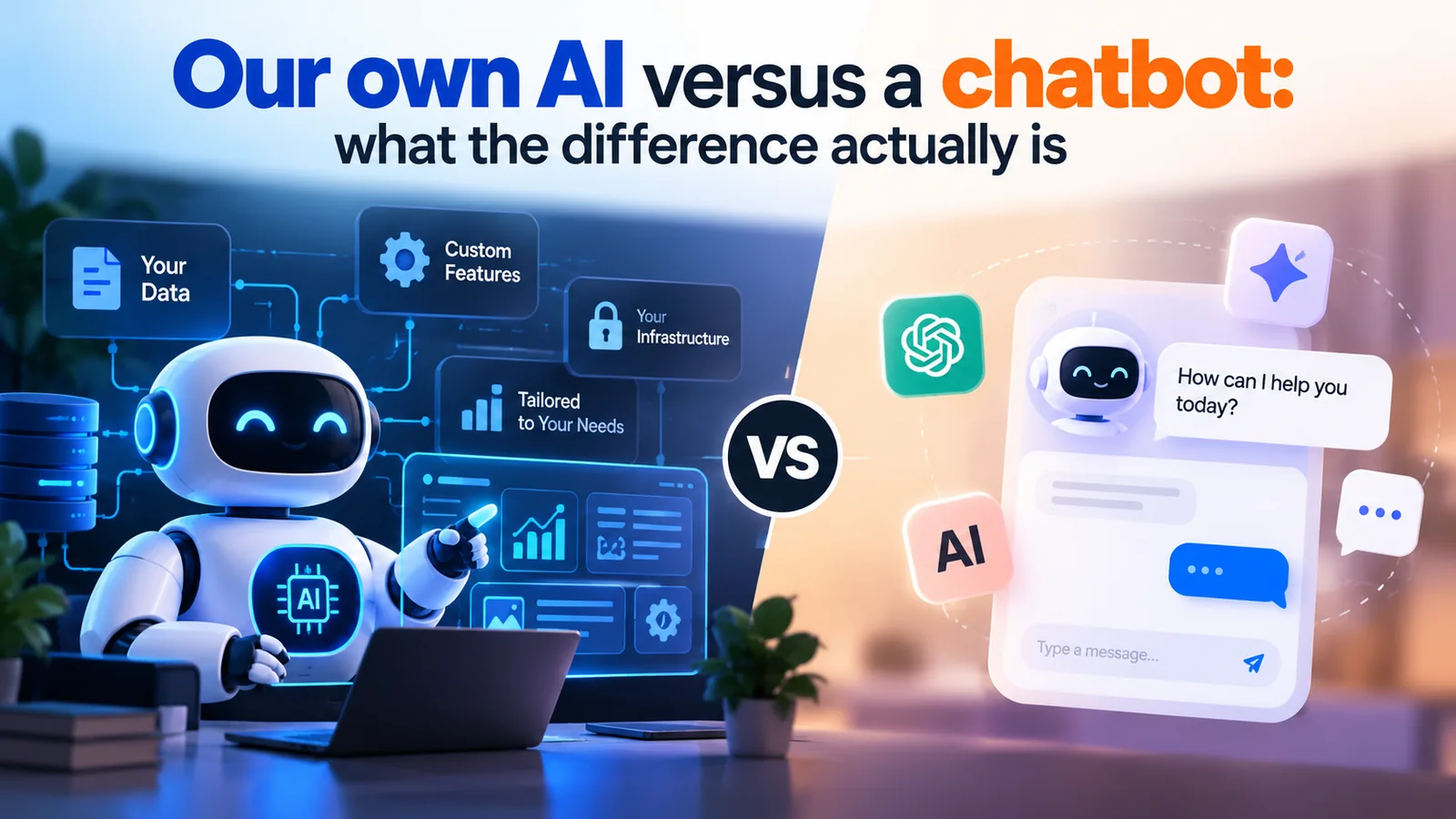
Talha Javed7 min readA generic chatbot and an AI trained on your business look the same in a demo. They behave very differently in month three. Here is what sits behind each, and when a simple chatbot is all you need.
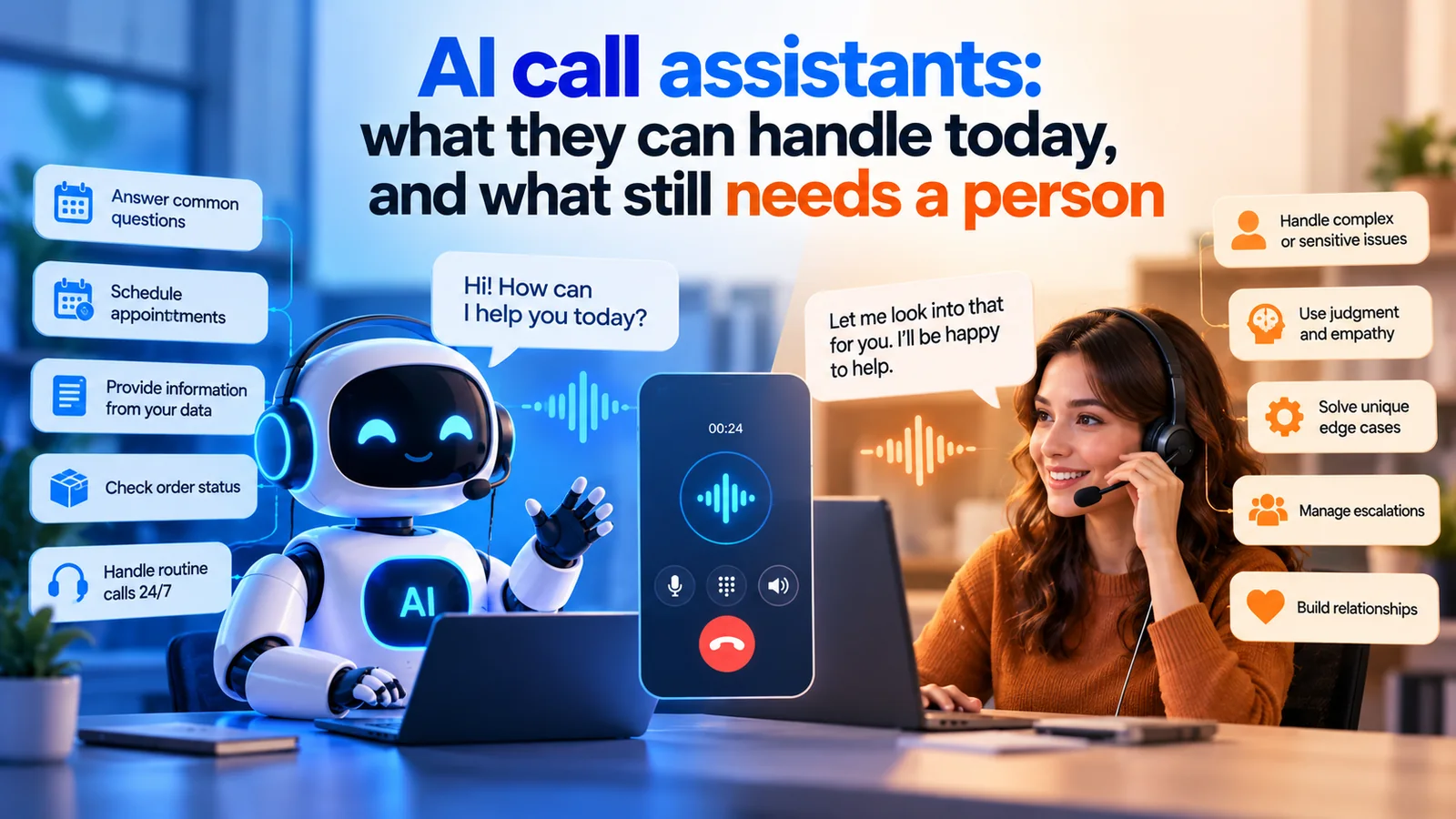
An AI that answers your phone is no longer science fiction, but it is not a receptionist either. Here is where voice assistants earn their keep, where they fail, and how we design the hand-off.
A free 30-minute call with a senior engineer. You leave with a plan and a price range, whether or not you hire us.