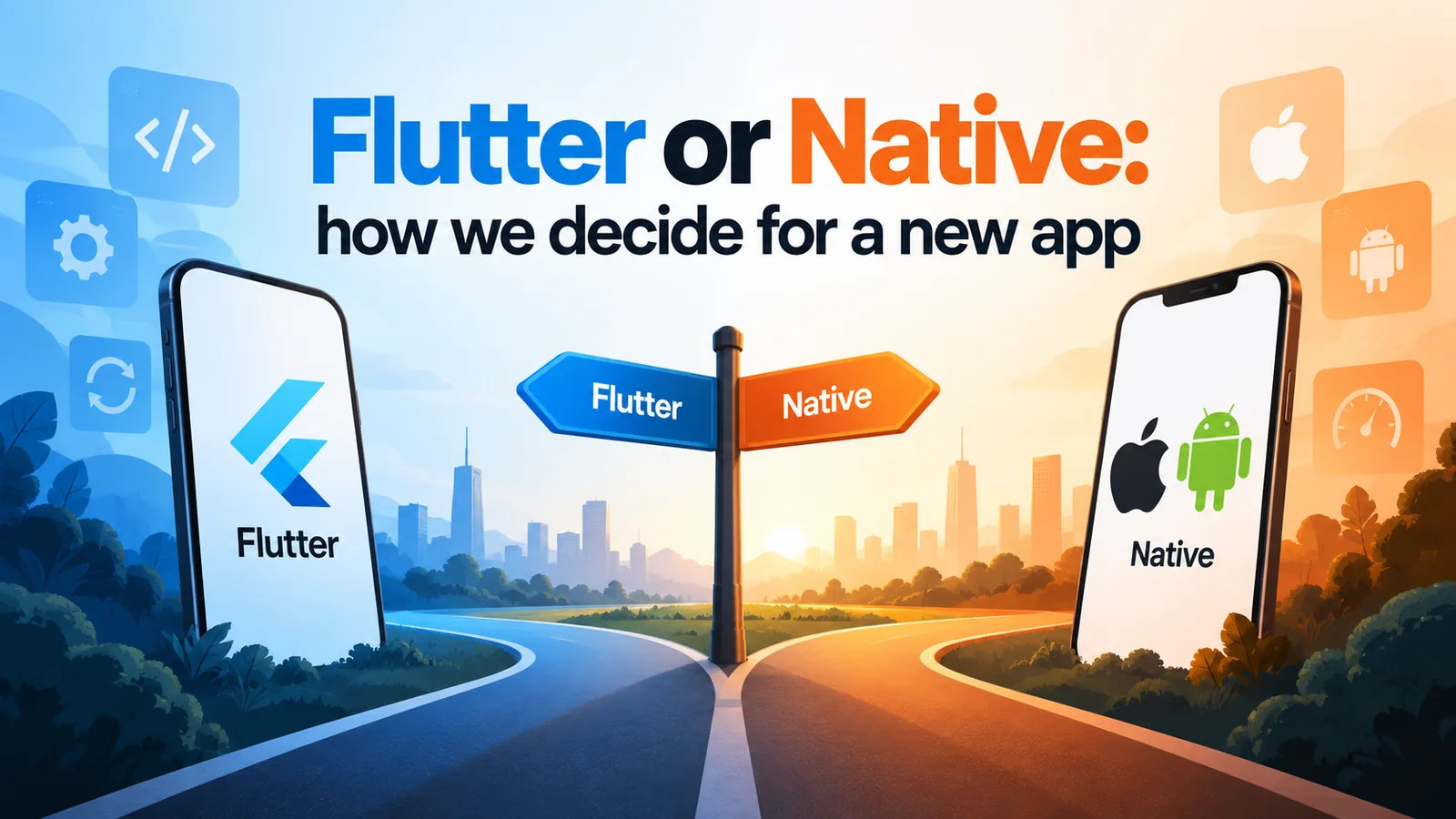
Flutter or native: how we decide for a new app
Most apps should be built once in Flutter. Some should not. Here is the short checklist we run through with every client before writing a line of code.
 Talha Javed2 min read
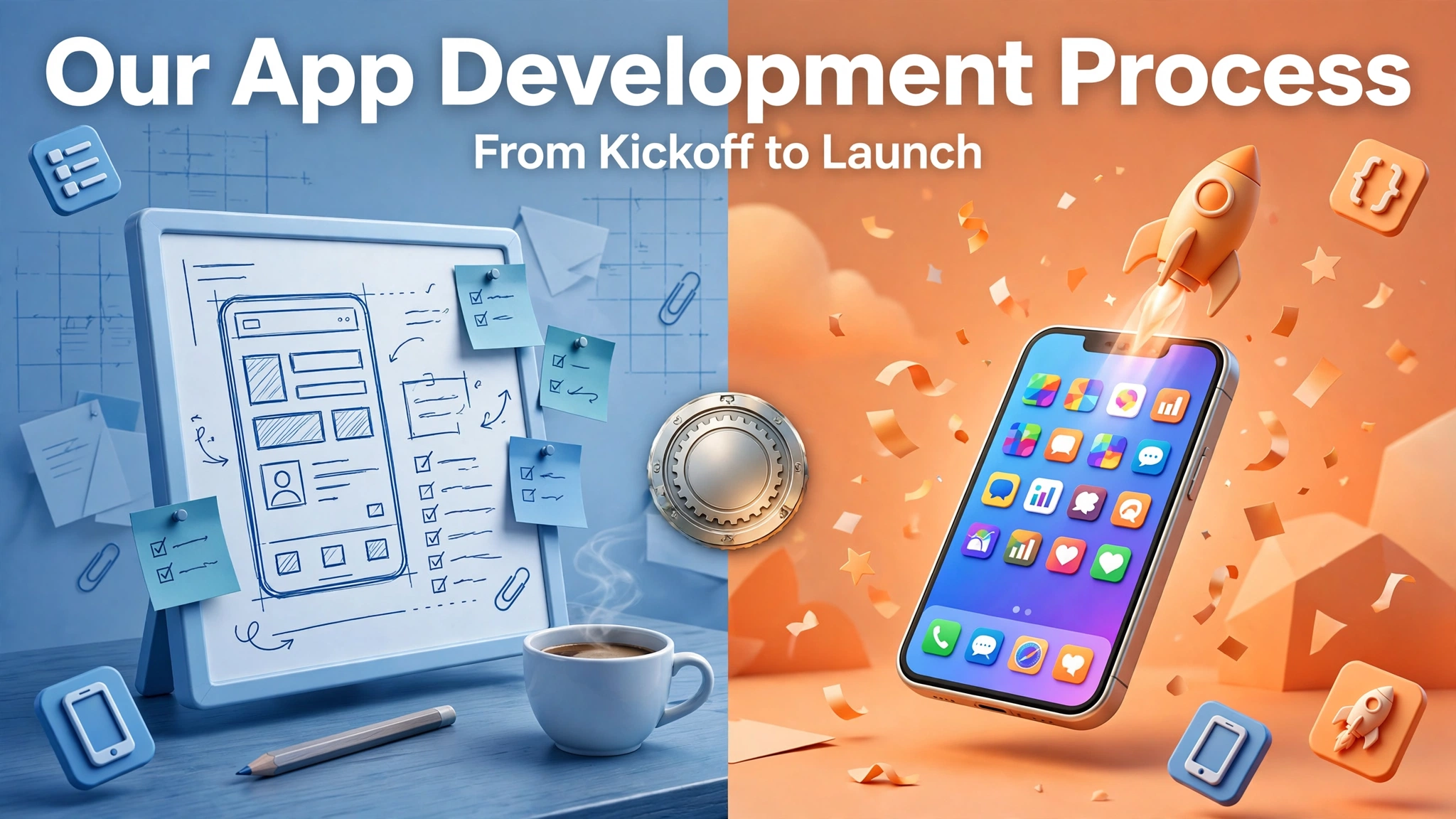
Every agency claims to have an app development process. Most will show you a diagram with five boxes and an arrow. The diagram is not the process. What matters is what happens inside each box, who you hear from, and when you get to put your hands on something real. This is the unfiltered version of ours — the one we actually run at Tjvex Studio, from the first kickoff call to the day your app goes live on the stores.
The first call is not a sales call wearing a costume. It is a working session, and we come with questions that some clients find uncomfortable: who is this app for, exactly? What does success look like in six months, in one sentence? And just as important — what is this app not going to do?
That last question is where budgets are saved. Nearly every failed project we have ever been asked to rescue started with a scope that was really a wish list. So we write down the non-goals alongside the goals. If the admin dashboard can wait until version two, it goes on the version-two list, in writing, before anything is priced.
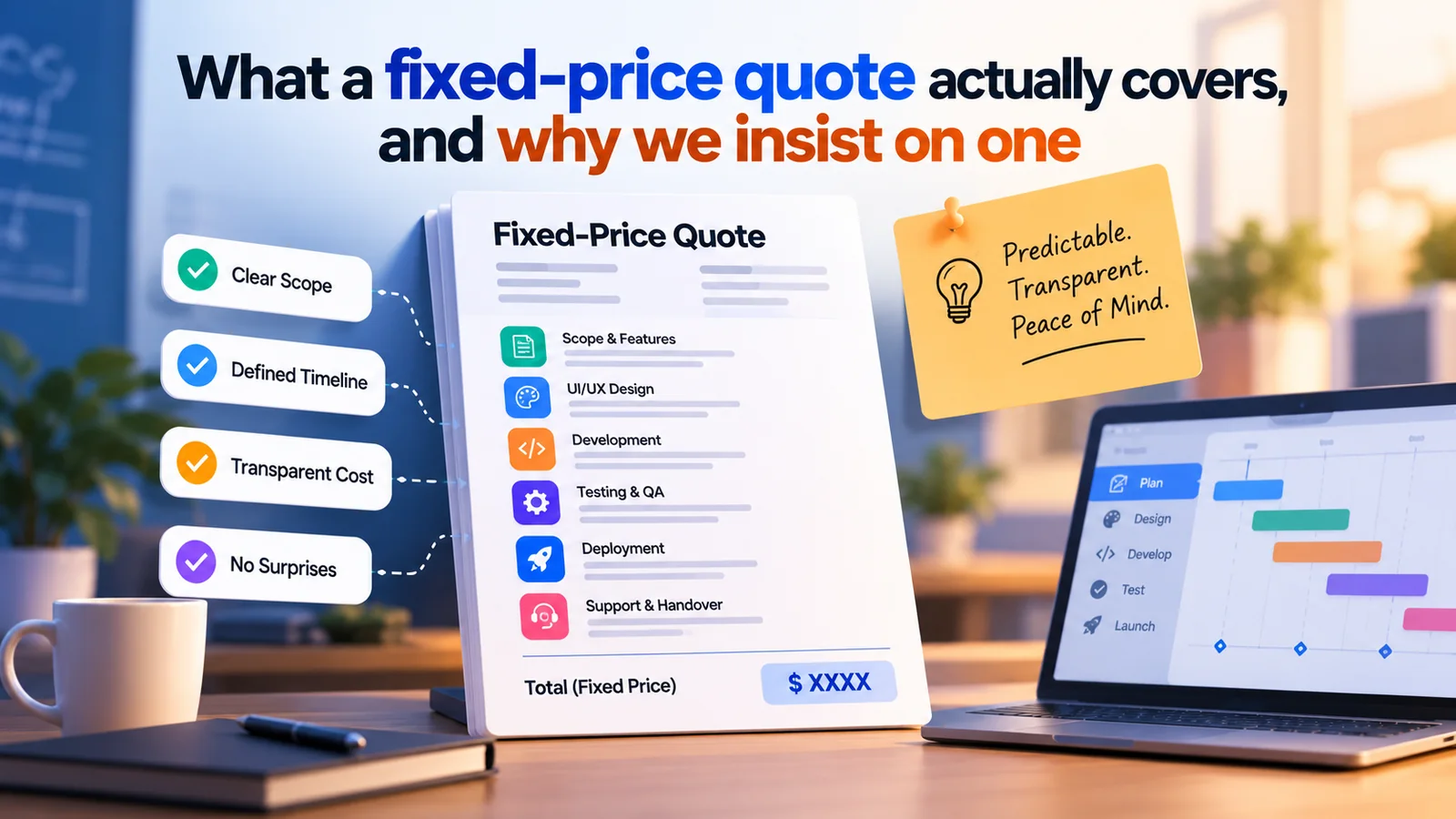
The output of kickoff is a fixed-price proposal with clear boundaries: what gets built, what the milestones are, and what counts as a change. We insist on fixed pricing for a simple reason — it moves the risk of underestimation onto us, which is where it belongs. If we misjudge the effort, that is our problem, not yours. You will know the total before we start, and the total does not drift.
Once the scope is signed, we do not open the code editor. We open Figma.
First come wireframes — rough, grey, deliberately ugly. They exist to settle structure: what goes on each screen, in what order, and what happens when the user taps the important button. Ugly is a feature here; nobody falls in love with a grey box, so nobody defends a bad layout out of pride.
Then the high-fidelity designs: real colours, real typography, real content. And then the step most clients never see but feel in the final product — a component library. Every button, card, input field and loading state gets designed once and reused everywhere. It is the difference between an app that feels coherent and one that feels assembled from five different apps.
You approve the screens before a single line of production code exists. In our experience, a week spent in Figma saves three weeks of rework in code. Changing a screen in a design tool costs minutes; changing it after the backend, the API and the mobile client are all built around it costs days. This is the cheapest phase to be picky in, so be picky here. Design is part of every build we do — see the full range on our services page.
Here is the part where most agencies go quiet for two months and then reappear with something you hate. We do the opposite: you get a working build on your own phone every week, from the first week of development.
The rhythm is simple. Work is planned in one-week slices. Each slice ends with a demo — not a slide deck, not a status report, a link you open on your phone with something new in it. Early demos are rough: placeholder images, half the screens missing. That is the point. You react to the real thing while it is still cheap to change direction, not to a description of it.
Behind the scenes, two habits keep this honest. The first is continuous integration: every piece of code merged by any developer automatically builds and runs the test suite, so the app is never in a state where it works on one machine but nowhere else. The second is clean handoffs between the moving parts — the design tokens flow from Figma into the code, and the mobile app talks to the backend through a documented API contract, so the frontend and backend teams move without stepping on each other.
You always know where the project stands because you can see it — if a week passes without a visible build, something is wrong.
Your users will open your app on a three-year-old phone, on a train going through a tunnel, with twelve other apps fighting for memory. So that is what we test for.
The checklist we run before any release covers the unglamorous stuff: real devices, not just simulators. Bad-network behaviour — what does the app do when the connection drops mid-payment? The edge cases: empty states, the account with no profile picture, the order list with four hundred items.
This phase is not a formality tacked on at the end. Roughly the last fifth of the timeline is reserved for it, and we protect that time even when earlier phases ran long. Cutting testing is how you ship an app that gets one-star reviews in its first week, and one-star reviews are a tax you pay forever.
Launch day feels dramatic from the outside. From the inside it should feel boring, because everything was decided weeks earlier.
The launch checklist covers the stores themselves — listing copy, screenshots, privacy policy links, the review guidelines both Apple and Google enforce — and the infrastructure: monitoring, crash reporting, and a staged rollout so the first real users are hundreds, not hundreds of thousands. If something breaks at scale, we want to know from the dashboards before we know from the reviews, and we want the fix to reach users through a normal update, not an emergency.
We also plan the rollback before we need it. Hope is not a deployment strategy.
Here is the uncomfortable truth about the app development process as most agencies sell it: it ends at launch, right when the interesting part starts. Version one is a hypothesis. The analytics from the first month will tell you which half of your assumptions were wrong, and the agencies that disappear at launch leave you with nobody to act on that information.
Our process includes a first update inside the opening weeks — the quick wins the real usage data reveals — and then a maintenance arrangement that fits the product. Either way, you are not left holding a codebase nobody will touch, and the post-launch conversation is measured against the success metric we set back in the kickoff call, not vague feelings.
Whether you hire us or someone else, run their process through this filter. Red flags: no demo until the end, a price that is really a daily rate with no ceiling, you never meet the actual developers, design happens “as we code”, no plan for after launch. Every one of these is a story we have heard from a rescue client.
The green flags are the mirror image: fixed scope and fixed price, designs you approve before coding, a build on your phone every week, testing time that is protected rather than squeezed, and a post-launch plan in writing. Ask for these explicitly. A good agency will be relieved you asked — it means you have been burned before and you know what matters.
That is our process, without the diagram. If you have an app in mind, the fastest way to test the fit is a conversation about your version of the kickoff questions. We offer a free strategy call — thirty minutes with a senior engineer, and we reply within 24 hours.
It depends on scope, honestly — anyone who quotes you a timeline before hearing the requirements is guessing. As a rough guide from our experience: a focused MVP typically runs eight to twelve weeks from kickoff to store launch, and a full-featured product runs four to six months. The fixed proposal you get after kickoff carries the real number for your project.
Same answer: scope decides. What we can promise is the shape of the answer — a fixed price, agreed before work starts, with the boundaries written down. No hourly meter running in the background, no surprise invoices. The proposal breaks the build into milestones so you can see where the money goes.
Yes, completely. The repository, the store listings, the cloud accounts and the credentials are all in your name from day one. If you ever want to take development in-house or move to another agency, everything transfers with documentation. Code you paid for but cannot access is not an asset, it is a hostage situation.
Usually, yes — about a third of our work starts this way. We begin with a paid audit: we read the codebase, check the architecture, and tell you honestly whether it is worth continuing or cheaper to rebuild. Sometimes the honest answer is rebuild, and we would rather tell you that in week one than discover it in month three.
More from the studio.
Most apps should be built once in Flutter. Some should not. Here is the short checklist we run through with every client before writing a line of code.
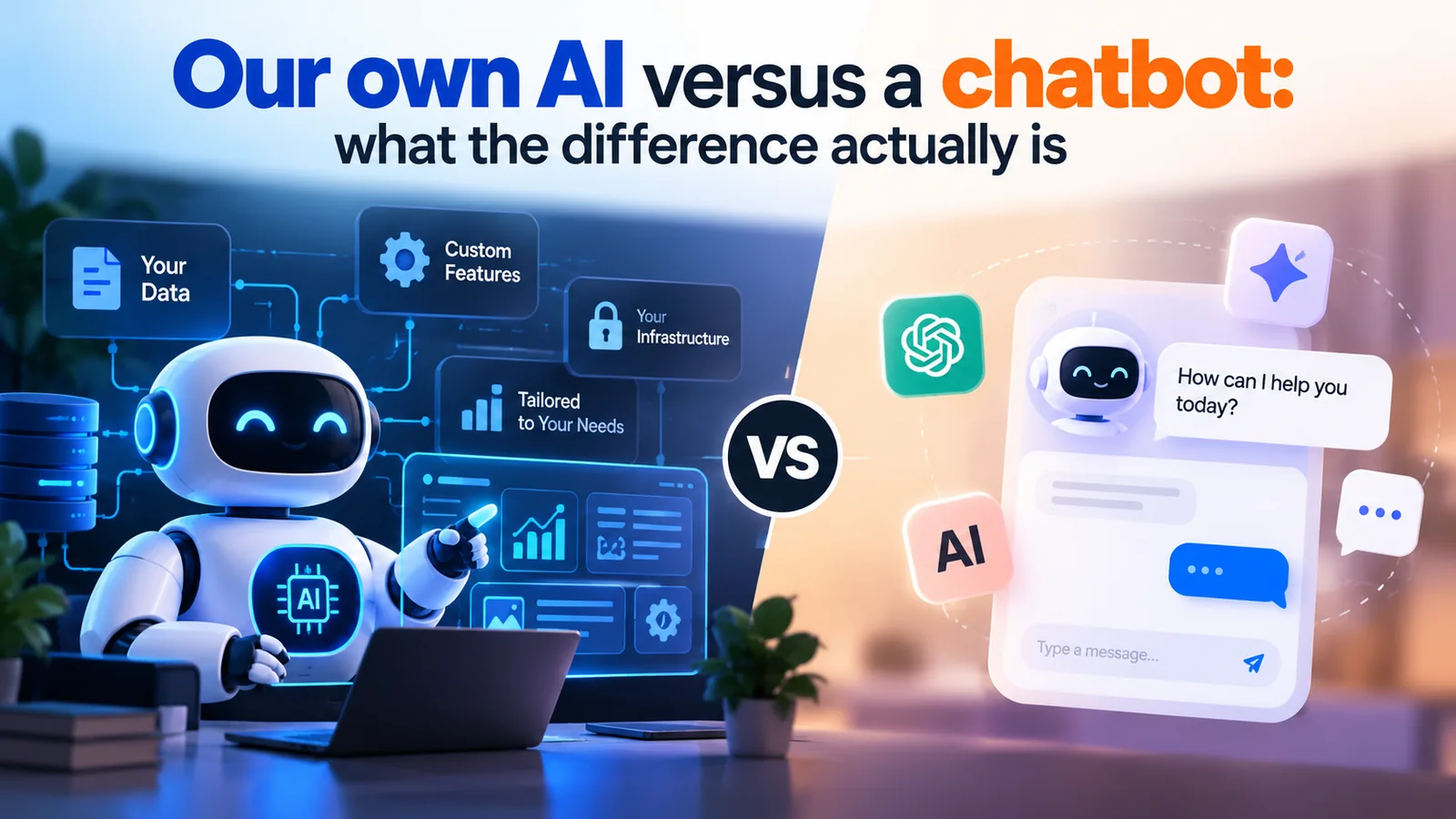
Talha Javed2 min readA generic chatbot and an AI trained on your business look the same in a demo. They behave very differently in month three. Here is what sits behind each, and when a simple chatbot is all you need.
Hourly billing moves the risk onto you. A fixed price moves it onto us, which is where it belongs. Here is what goes into ours, what is excluded, and how changes are handled without drama.
A free 30-minute call with a senior engineer. You leave with a plan and a price range, whether or not you hire us.