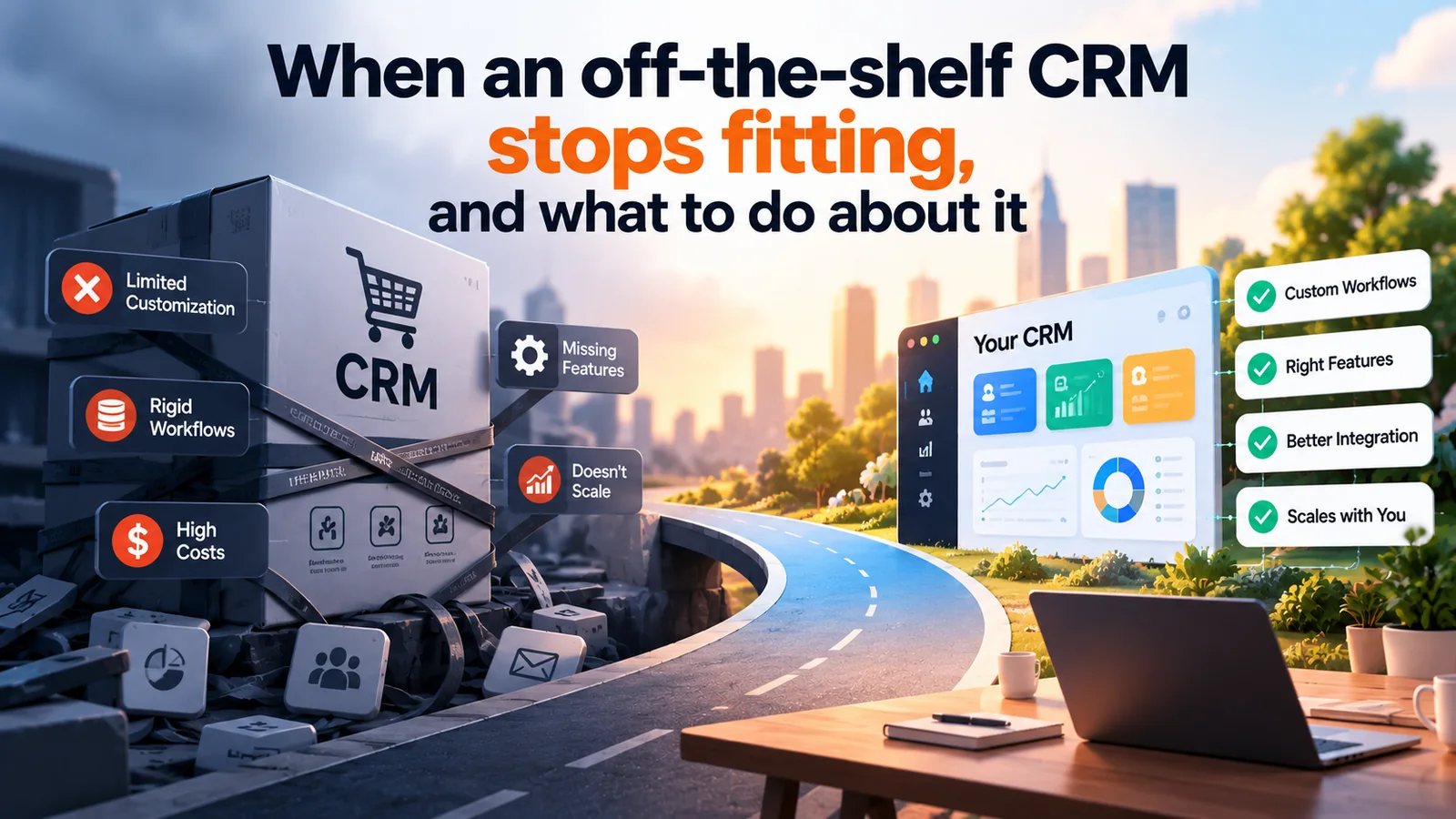
When an off-the-shelf CRM stops fitting, and what to do about it
HubSpot, Zoho and Salesforce are the right answer for most companies. These are the signs that yours has outgrown them, and the three options you have when it does.
IAImtiaz Ahmad3 min read
We build custom CRMs and internal systems, so you might expect us to say everyone needs one. They don’t. HubSpot, Zoho, Pipedrive and Salesforce are good products, and for a sales team with a fairly standard pipeline they are the right call: fast to set up, cheap per seat, and someone else fixes the bugs.
The question is what to do when the fit starts to break. Here is how we think about it.
Signs you have outgrown the tool
Spreadsheets have grown around it. The CRM holds the contacts, but the actual work — quotes, measurements, production status, deliveries — lives in Excel files that someone reconciles by hand every week.
Your process has steps the tool doesn’t have words for. You are using “Deal stage” to mean something it was never meant to mean, and new staff need a page of notes to decode it.
The per-seat price now dwarfs the benefit. The tool was cheap with five users. With forty, including people who only need to see one screen, the invoice is a line item the finance team keeps asking about.
You need it on the shop floor or in the field, offline, in one tap. Generic mobile apps are built for salespeople in cafés, not for a workshop or a warehouse.
Integrations are the job. Half your week is spent moving data between the CRM, accounting, the e-commerce store and WhatsApp, and the connectors keep breaking.
One of these is normal. Three or more usually means the tool is now shaping the business rather than the other way round.
Option 1: configure harder
Before replacing anything, it is worth a serious attempt at bending the existing tool: custom objects, automation rules, a better-integrated add-on. Sometimes a few days of expert configuration buys another two years. We will say so if we think it will.
Option 2: keep the CRM, build around it
The CRM keeps doing what it is good at — contacts, pipeline, email — and we build the piece that is actually custom: a production tracker, a quoting tool, a field app, a customer portal. They talk to the CRM through its API, so nothing is duplicated and your sales team’s habits don’t change.
This is the most common shape for the systems we build. It keeps the risk small: one new piece at a time, each one replacing a spreadsheet.
Option 3: replace it
A fully custom system makes sense when the business process is the product — when how you track an order from enquiry to delivery is the thing that makes you better than competitors, and no generic tool models it well. Tailoring, manufacturing, logistics, specialist services and property are typical.
What you get is a system where every screen matches one step of your real process, and no seat licences — add as many users as you like. What it costs is a build project up front and an ongoing relationship with whoever maintains it. Both should be in the proposal in writing before you commit.
What we check before recommending any of these
Map the real process end to end, including the spreadsheets. The gaps between tools are usually the problem, not the tools.
Count the people who touch each step, and how often. That decides which parts need to be fast and mobile.
Find the one report the owner wishes they had. A custom system should be able to produce it on day one.
Decide what stays. Accounting almost always stays in the accounting package; we integrate, we don’t rebuild it.
If this sounds like where you are, send us a description of the process and the spreadsheets it runs on. The first conversation is free, and “configure what you have” is a perfectly good outcome of it.
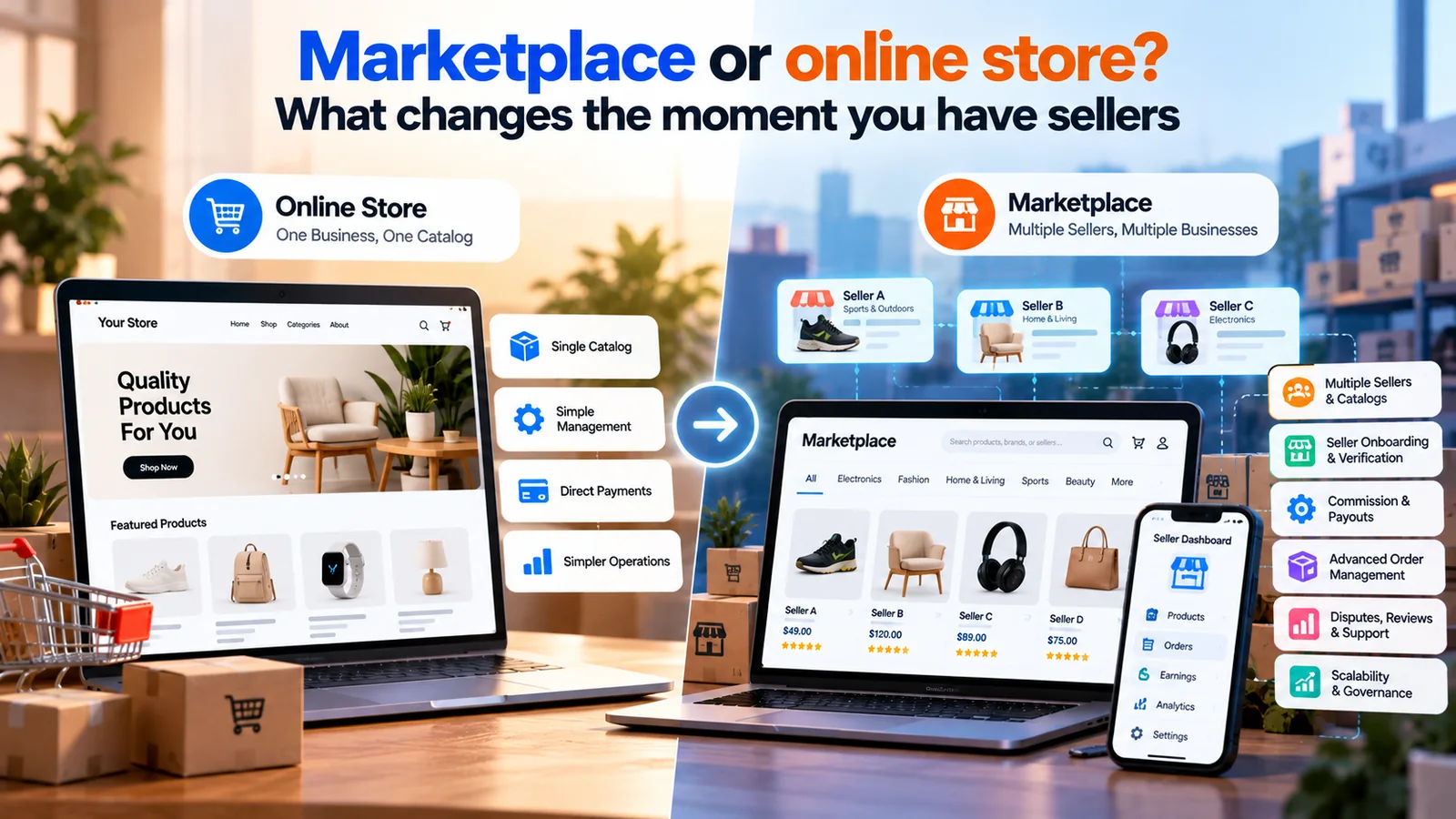
A shop sells your products. A marketplace sells other people's. That one difference touches payments, trust, disputes, onboarding and the law. Here is what to expect before you build.
Talha Javed3 min read
Tell us what you want to build
A free 30-minute call with a senior engineer. You leave with a plan and a price range, whether or not you hire us.
 Talha Javed3 min read